
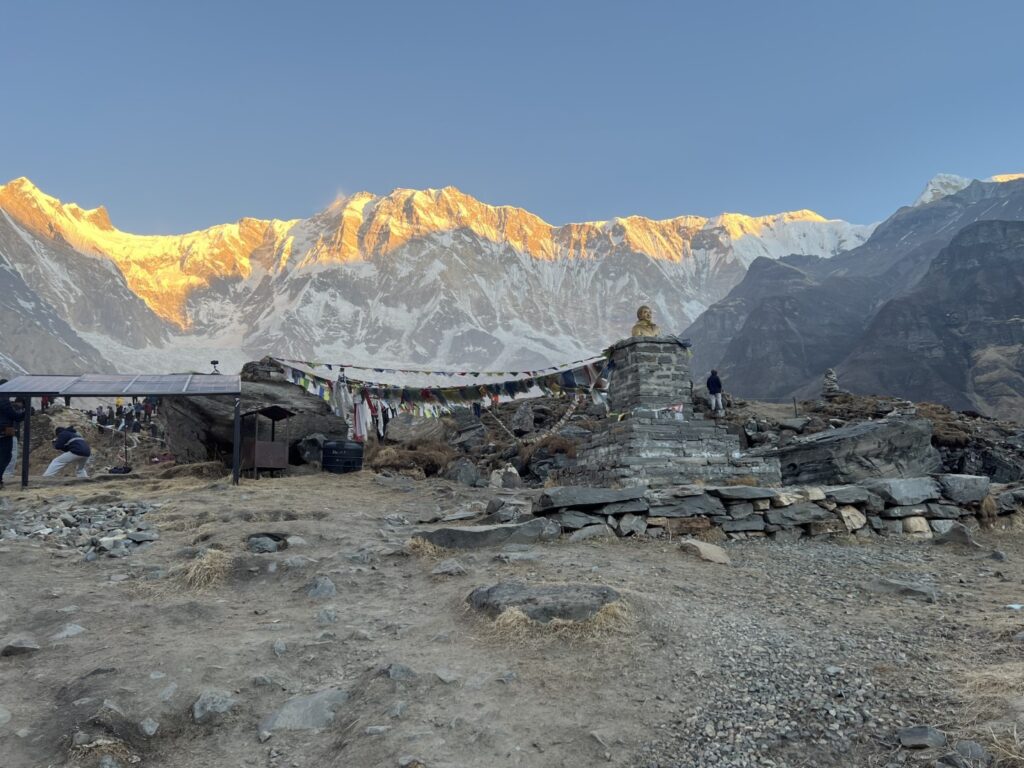
If you are planning the Annapurna Base Camp trek, one question often comes up early. What mountains will you actually see along the trail? Many trekkers expect constant views from day one, but the experience is more gradual and rewarding than that.
This trek is not just about reaching a destination. It is about watching the Himalayas reveal themselves step by step. You begin in green hills and villages, then slowly move into a high alpine world surrounded by some of Nepal’s most famous peaks.
In this guide, you will learn exactly which mountains you will see on the Annapurna Base Camp Trek, where you will see them, and what makes each one unique. This will help you set realistic expectations and understand why this trek feels so special.
What Makes Annapurna Base Camp Views Unique
Unlike some high-altitude treks, the Annapurna Base Camp route builds slowly. You do not get wide mountain views at the start. Instead, the mountains appear gradually as you gain elevation.
This creates a strong sense of progression. By the time you reach the base camp, you are completely surrounded by peaks. It feels like standing inside a natural amphitheater.
Key features of the views include:
- Close proximity to mountains rather than distant views
- Changing landscapes from forest to alpine terrain
- A full 360-degree mountain panorama at base camp
Major Annapurna Base Camp Mountains You Will See
Annapurna I
Annapurna I is the highest peak you will see on this trek, reaching 8,091 meters (26,545 ft). It is also one of the most dangerous mountains in the world for climbers due to its steep faces and avalanche risk.
From Annapurna Base Camp, you get a direct and powerful view of its massive south face. The scale feels overwhelming because the mountain rises sharply above you.
You will mostly see Annapurna I clearly at:
- Annapurna Base Camp
- Machhapuchhre Base Camp on clear days
Machhapuchhre
Machhapuchhre, also known as Fishtail Mountain, rises to 6,993 meters (22,943 ft) and is one of the most iconic peaks in Nepal. Its sharp double summit looks like a fish tail, which makes it easy to recognize.
This mountain is sacred and has never been climbed. That adds to its mystique and cultural importance.
Best viewpoints include:
- Ghandruk and Chhomrong for early views
- Deurali for closer perspectives
- Machhapuchhre Base Camp for dramatic close-up views
Annapurna South
Annapurna South reaches 7,219 meters (23,684 ft) and is one of the most prominent peaks you will notice as you approach the base camp area. It stands directly across from the trail near the higher sections.
Its snow-covered slopes and wide structure make it visually striking, especially during sunrise and sunset.
You will see it clearly from:
- Chhomrong
- Bamboo and Deurali sections
- Annapurna Base Camp
Hiunchuli
Hiunchuli rises to 6,441 meters (21,132 ft) and sits close to Annapurna South, often appearing as part of the same mountain wall. It may not stand out at first, but it adds depth to the overall landscape.
From base camp, Hiunchuli forms part of the continuous ring of mountains around you.
Gangapurna
Gangapurna stands at 7,455 meters (24,459 ft) and is visible mainly from the Annapurna Sanctuary area. It is known for its glacier and ice-covered slopes.
Although it is more prominent on the Annapurna Circuit, you can still catch glimpses of it near the base camp if the weather is clear.
Annapurna III
Annapurna III rises to 7,555 meters (24,787 ft) and contributes to the wide skyline in the Annapurna region. It is not always the main focus, but it completes the dramatic horizon.
It becomes more noticeable once you reach higher elevations closer to base camp.
Where You See the Best Mountain Views on the Trail
Ghandruk and Chhomrong
These villages offer your first real mountain views. You will see Machhapuchhre and Annapurna South rising above the hills.
These early views are important because they give you a preview of what lies ahead.
Bamboo to Deurali
As you move deeper into the valley, the forest begins to open up. You start seeing larger sections of the mountain range.
This section also feels more remote and less crowded. The mountains appear closer, and the valley becomes narrower.
Machhapuchhre Base Camp (MBC)
This is where the landscape changes completely. Trees disappear, and the terrain becomes alpine.
You are now surrounded by snow peaks. Machhapuchhre dominates the view, and other peaks begin to rise around you.
Annapurna Base Camp (ABC)
This is the highlight of the trek. You stand in the middle of a natural amphitheater surrounded by mountains.
You can see:
- Annapurna I directly in front
- Annapurna South and Hiunchuli to the side
- Multiple peaks forming a complete circle
Sunrise and sunset here are especially memorable as the light changes the color of the mountains
What Time of Day Offers the Best Views
Mountain visibility changes throughout the day. Weather patterns play a big role.
For the best experience:
- Early morning offers the clearest skies and sharpest views
- Midday can bring clouds, especially in warmer months
- Evening provides soft light and warm tones on the peaks
If you want the best photos and visibility, wake up early at both MBC and ABC.
Seasonal Impact on Mountain Views
Spring (March to May)
Spring offers clear skies in the morning along with blooming rhododendron forests at lower elevations, which makes the overall trekking experience more vibrant. You can expect good visibility during early hours, while slight haze may develop in the afternoon. Temperatures remain comfortable, making it a balanced season for both views and trekking conditions.
Autumn (September to November)
Autumn is widely considered the best season for mountain views due to its stable weather and exceptional clarity. Skies are usually very clear, and visibility remains strong throughout the day. This allows you to see distant peaks in sharp detail, making it ideal for photography and panoramic mountain experiences.
Winter and Monsoon
Winter can still offer clear skies, especially in the mornings, but temperatures drop significantly, particularly at higher elevations. In contrast, the monsoon season brings heavy cloud cover, frequent rain, and limited visibility, which often blocks mountain views. If your main goal is to see the annapurna base camp mountains clearly, spring and autumn remain the most reliable choices.
Practical Insights for Better Mountain Viewing
To make the most of the annapurna base camp mountains experience, keep these tips in mind.
- Plan Your Timing: Start trekking early each day. You will reach viewpoints before clouds build up.
- Choose the Right Season: Autumn is best for clarity. Spring is good for a balance of views and scenery.
- Stay Flexible: Weather in the mountains changes quickly. A cloudy afternoon can turn into a clear morning the next day.
- Pick Good Accommodation Spots: Stay in teahouses that offer open views. Rooms or dining areas facing the mountains improve your experience.
- Use a Guide for Insight: A guide can help you identify peaks and explain their names and significance. This adds depth to what you see.
Conclusion
The Annapurna Base Camp trek offers more than just a destination. It delivers a journey where mountains slowly reveal themselves with every step.
You start with distant glimpses and end surrounded by some of the most iconic peaks in Nepal. Annapurna I, Machhapuchhre, Annapurna South, and others create a powerful and immersive experience.
If you understand where and when to expect these views, your trek becomes more meaningful. You will not just see mountains. You will understand them.
Plan well, start early each day, and take your time to enjoy the changing landscape. The mountains are not just at the end. They are part of the entire journey.
Frequently Asked Questions
What is the most famous mountain on the Annapurna Base Camp trek?
Machhapuchhre is the most iconic due to its unique shape and cultural importance. Annapurna I is the highest and most dominant peak at base camp.
Can you see Annapurna I during the entire trek?
No. You mainly see Annapurna I clearly once you reach higher elevations near Machhapuchhre Base Camp and Annapurna Base Camp.
Is Annapurna Base Camp surrounded by mountains?
Yes. The base camp sits inside a natural amphitheater where mountains surround you on all sides.
Which season has the best mountain views?
Autumn offers the clearest skies and best visibility. Spring also provides good views with added natural scenery.
Do you need a guide to identify the mountains?
It is not required, but a guide helps you understand the peaks and enhances your overall experience.